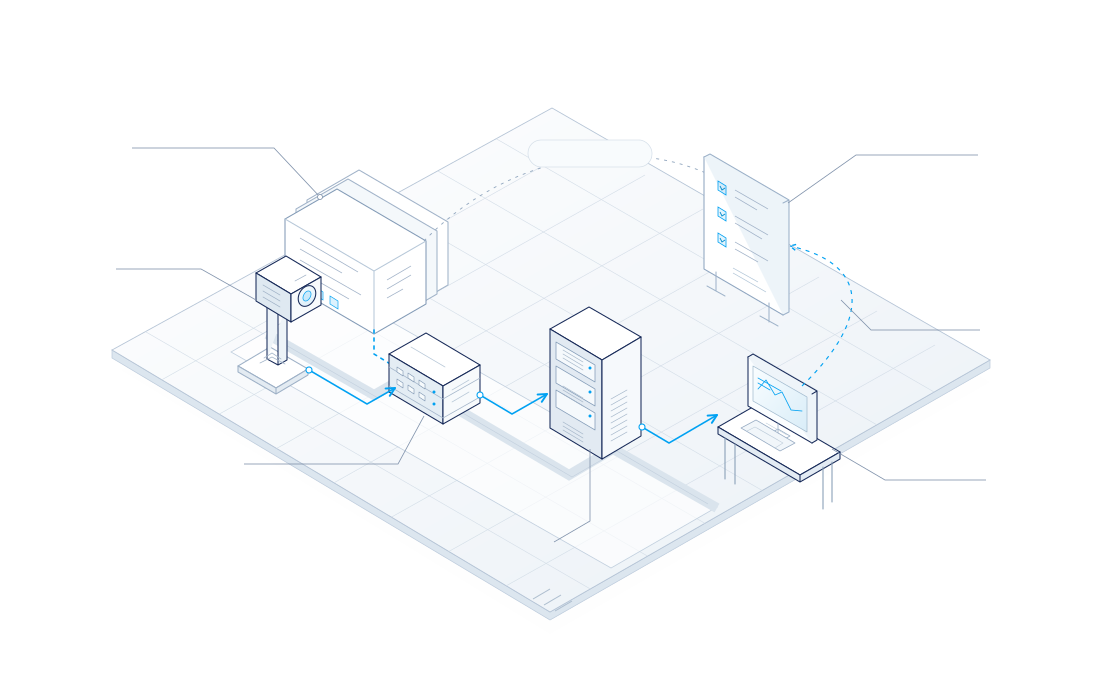
Bring architecture, technology, and operational requirements into a coherent whole.
Connected engineering
Every component. A shared mission.
Trace an operational need through system architecture and the evidence used to verify it.
Systems / Architecture & evidenceExplore the layers ↗
01 / Requirements
Start with the operational requirement.
Connect mission needs to measurable acceptance criteria, interface expectations, timing budgets, and recovery behavior.
Selected layer
Our expertise
From requirements to operational readiness.
Expression helps teams identify technology gaps and integrate advanced capabilities with existing systems. We work from requirements through design, development, and the delivery of tested production systems.
Our work supports mission assurance, network integration, intelligence, surveillance and reconnaissance, and command and control. Systems engineering connects each component to the wider operational need.
From mission requirements to engineering evidence.
Connect architecture decisions to measurable requirements, defined interfaces, and a verification strategy.
01
Requirements allocation & timing
How does an end-to-end response requirement become a testable design?
Inputs
Mission threads, operating states, latency and throughput limits, resource constraints, and expected load.
Analysis
Allocate performance budgets to functions and interfaces. Trace each requirement to its design element and verification method. Define measurement boundaries and timing uncertainty; examine behavior under peak load and degraded conditions.
Engineering outputs
Requirements verification matrix, timing and capacity budgets, traceability links, and acceptance criteria.
02
Interfaces & system integration
What must remain consistent when new capabilities connect to legacy systems?
Inputs
Message schemas, units, coordinate frames, timestamps, update rates, state transitions, and legacy interface behavior.
Analysis
Define interface contracts and synchronization assumptions. Exercise boundary conditions, stale or out-of-order messages, lost connectivity, and recovery paths across the integration sequence.
Engineering outputs
Interface control documents, architecture and sequence models, integration plans, and interface conformance tests.
03
Reliability & architecture trades
Which design balances mission continuity, complexity, and resource limits?
Inputs
Mission duration, failure modes, repair assumptions, redundancy options, and constraints on power, bandwidth, weight, and cost.
Analysis
Use failure mode and effects analysis, fault trees, and reliability models to examine single points of failure. Compare fault containment and recovery options, then test how uncertainty changes the trade.
Engineering outputs
Failure and risk models, reliability estimates, architecture trade rationale, and evidence needed for verification.
Put intelligence to work
Bring the whole system into focus.
Connect requirements, architecture, and verification around your operational need.